
Lo Spritz, Venetian Aperitif, Back to its Origins

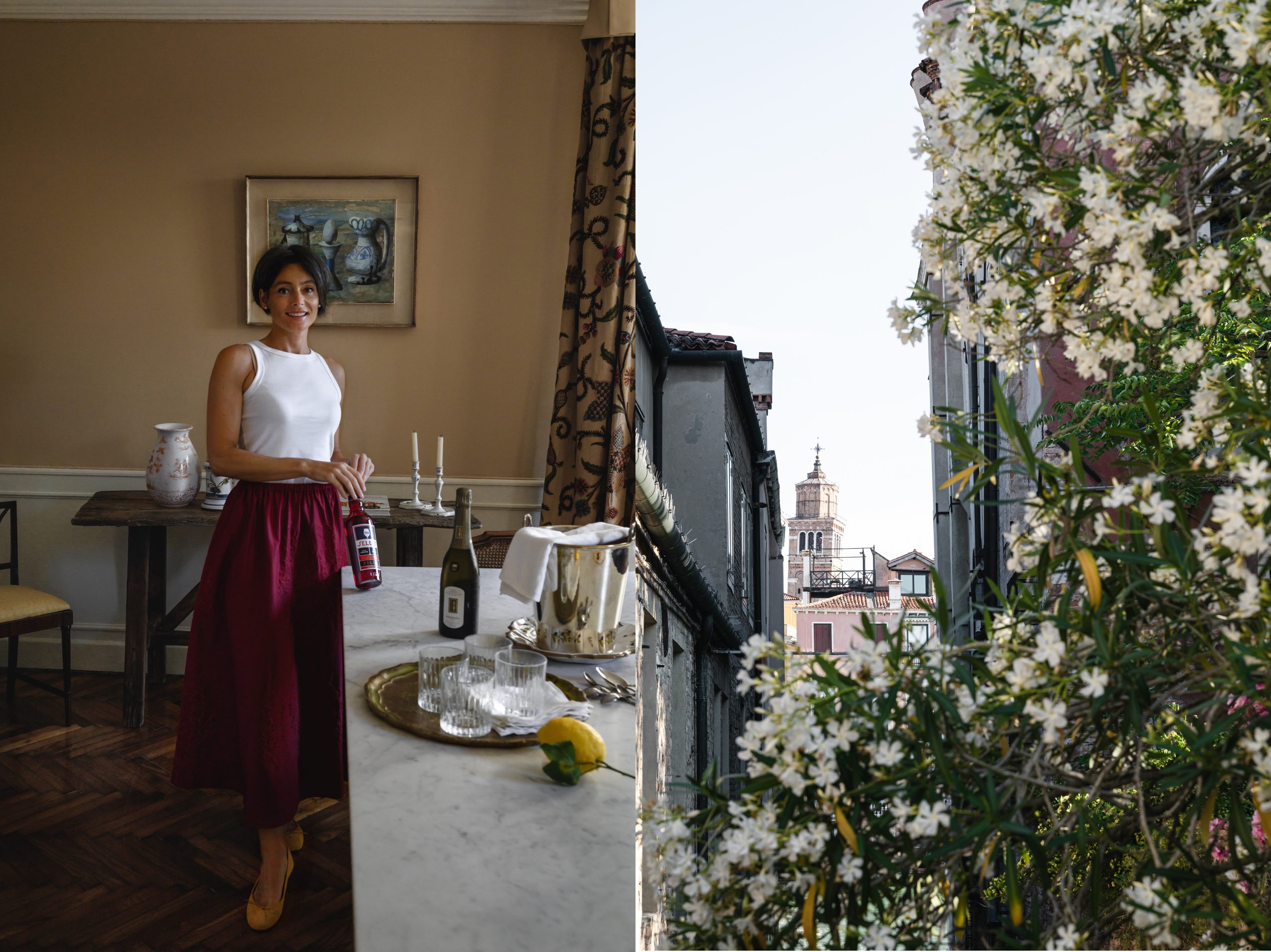
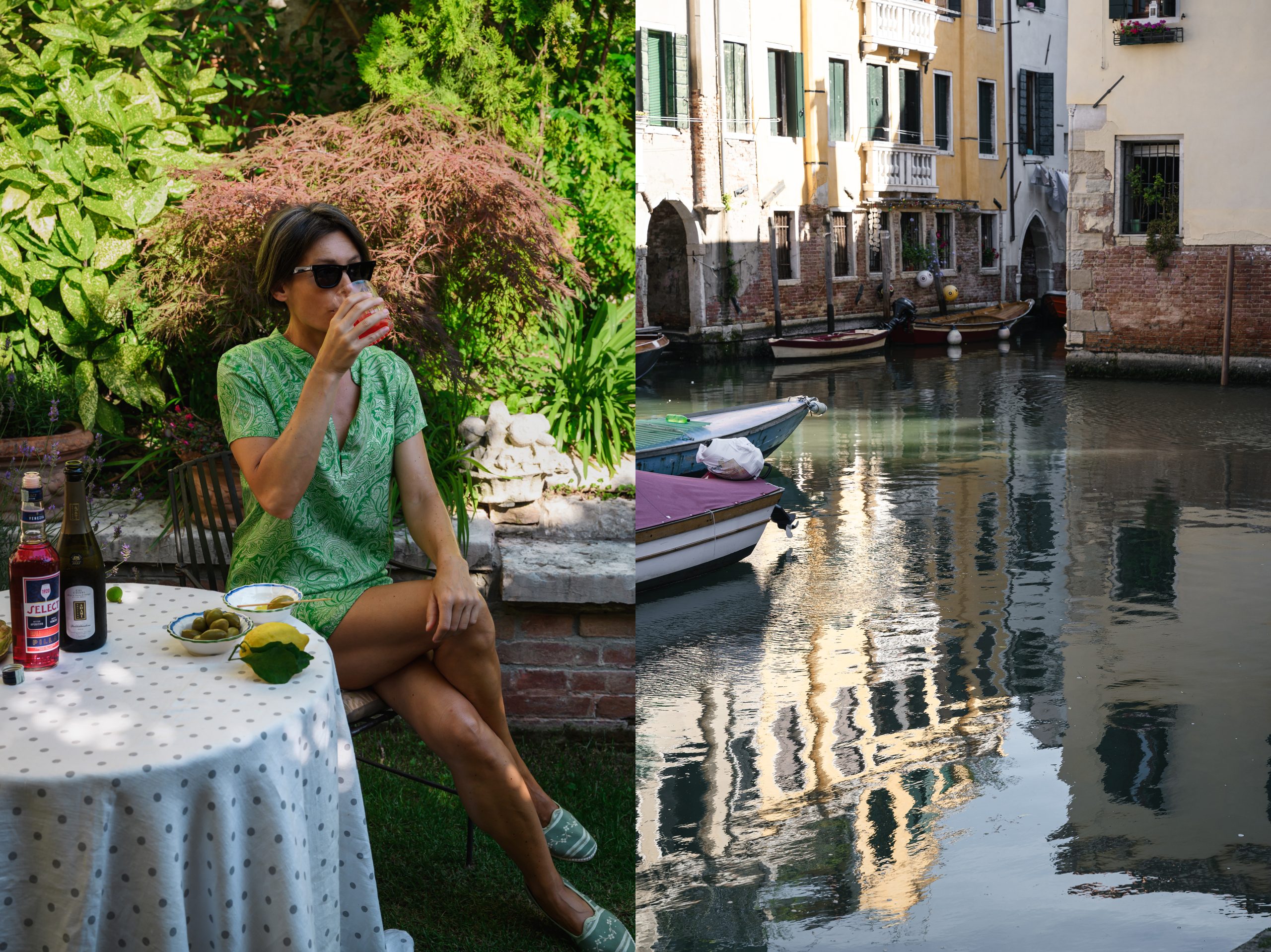
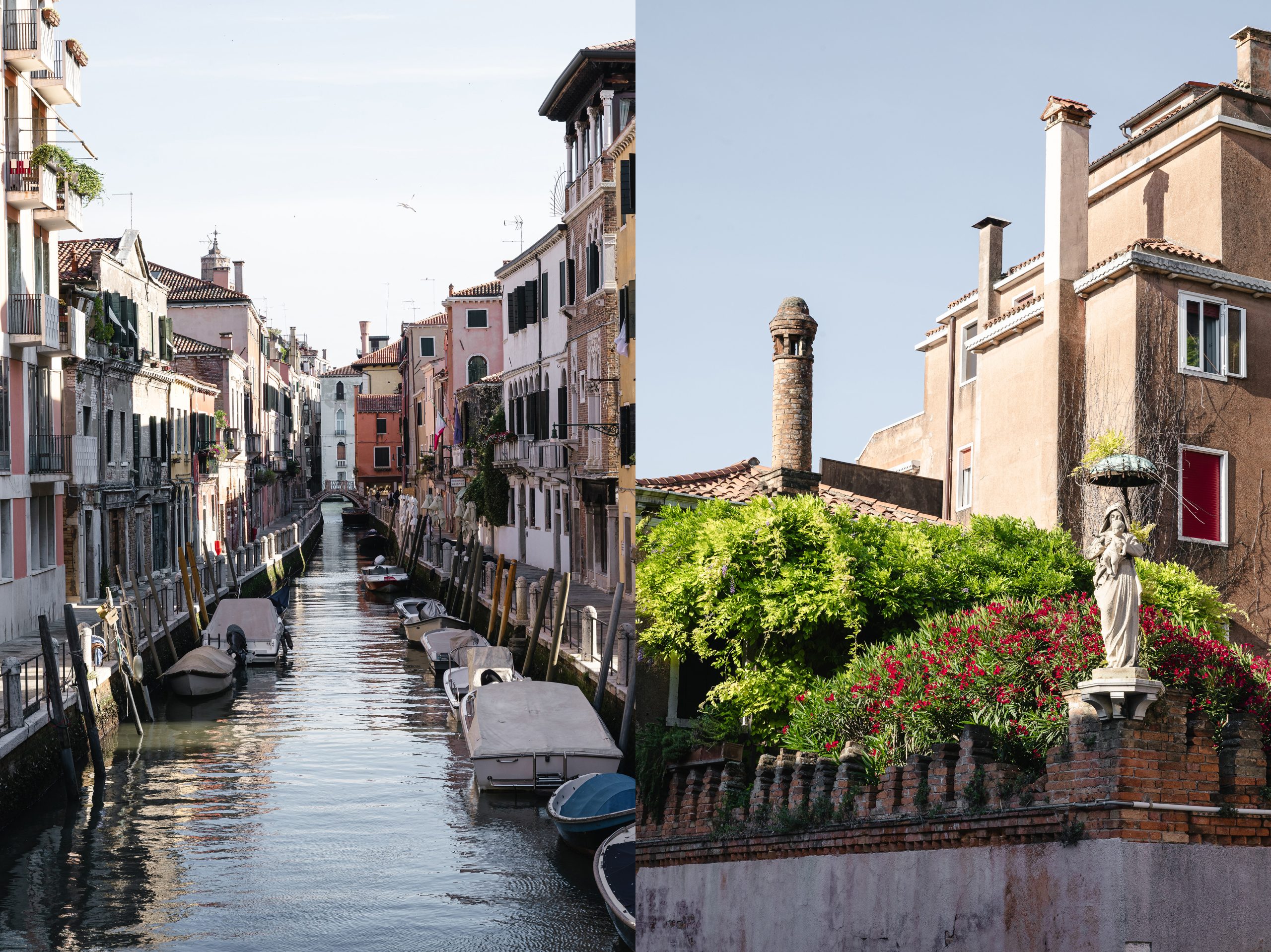
I was sitting in the garden under the comfortable shade of pergola cuddled by a gentle afternoon breeze wafting through the gates from the Giudecca Canal. The water of the much smaller canal that runs along the side of our house was rhythmically lapping against the walls and I was blissfully absorbed and fascinated by my latest find in the attic: ”Appetite for Life. The Biography of Julia Child” by Noel Riley Fitch. I had wanted to buy it and read it whilst still in London but the volume was somehow difficult to get, or it was just me who found it difficult – very strangely given Julia’s fame and the British infatuation with France and French cuisine. Instead, I had purchased ”My Life in France”, by Julia Child with Alex Prud’Homme, which I haven’t read yet…Well, as one by now could expect from our attic filled to the brim with cook books (many with the authors’ dedication), ”My Life for France” was also there. A hard cover book, a larger print with yellow pages marked by the passage of time. I will be reading the ”attic” copy which already feels laden with so many wonderful stories and adventures of Julia’s memorable years in France.
A few hours went by and I felt that I needed a little something. The Dégustateur had just finished his last work calls and joined me in the garden. The sun was gently giving its way to the golden warmth of the approaching evening, and that is the perfect time for a summer aperitivo, that special little something what we both felt like having.
We love wine, mainly red. It’s what we will always have to accompany our meals, both at home and in restaurants. Fairly often I’ll have a glass of champagne or Franciacorta (always well chilled for me) to start with; only one glass but it has to be something good and enjoyable – for it’s the prelude to a meal.
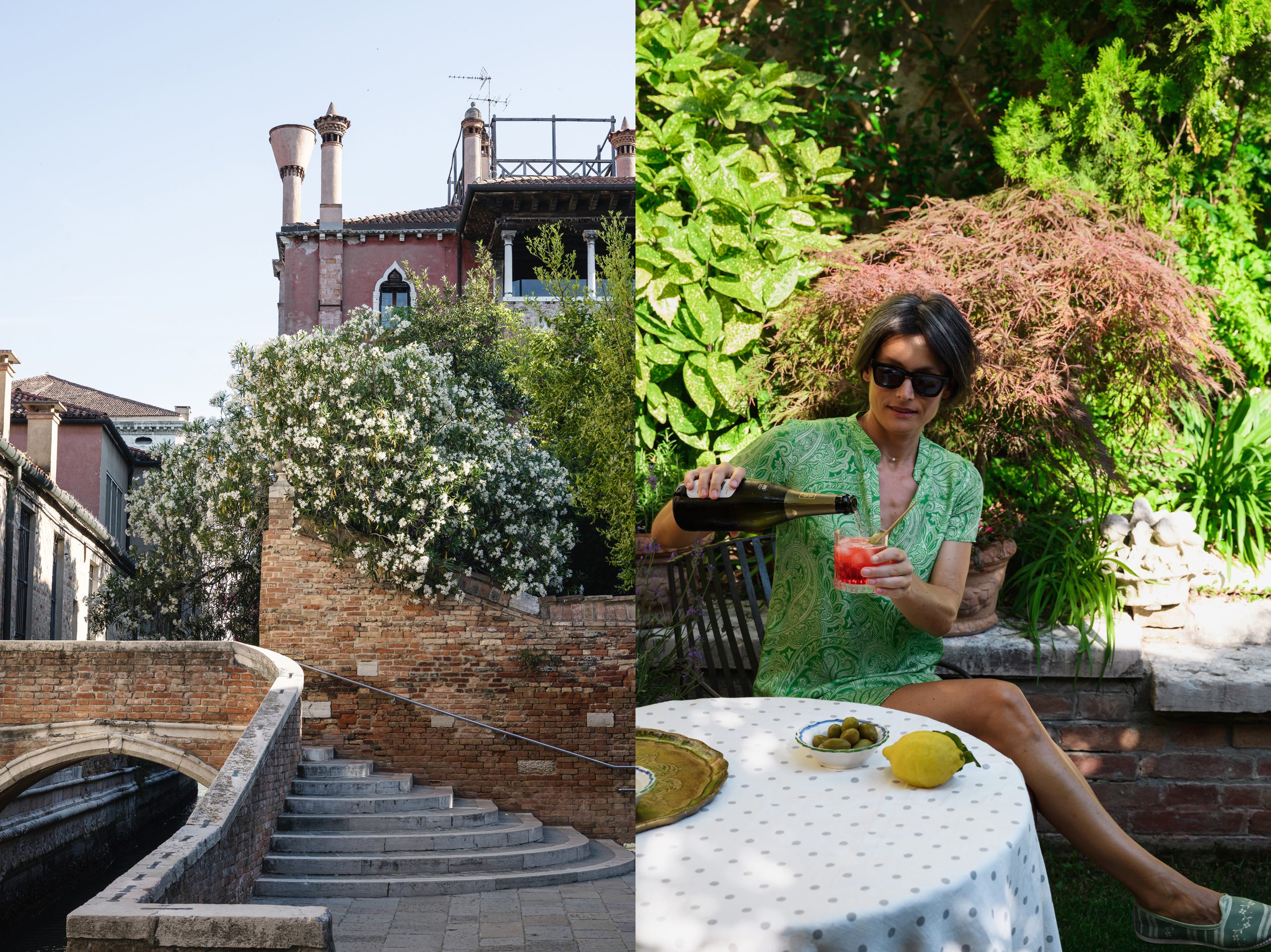
Since we came back to live in Venice, almost seven months ago already, I introduced the reluctant Dégustatur to a couple simple but fabulous cocktails: Americano and Negroni, and now he can’t ”live without them”. I bought a tray for large ice cubes which tend to melt very slowly keeping the drink cold rather than diluted with water, and in my opinion, one large ice cube in an old fashioned glass looks so elegant, making me feel if I were in a proper hotel bar. Did I mention we have a ”Negroni Club” in our house?
The aperitif culture is more lively and convivial in Venice. In fact, you can spot the locals having their spritz shortly after the breakfast hour, but then, for many the day starts very early here.
Lo Spritz represents the soul of the Venetian aperitif culture. It’s a ritual which unites the tradition and conviviality in just one glass.
Behind the simplicity of the spritz cocktail hides the perfect equilibrium of flavours whilst paying attention to the authentic ingredients. To make a worthy of its lagoon tradition spritz means knowing the right proportions of the appropriate components as well as respecting the formula which has been passed on for generations. There are so many incarnations of this drink mixed with various bitters: the classic Venetian – Select, the most popular (not only in Italy) Aperol, the one with a very defined bitter note Campari or artichoke based Cynar. You can also come across the mix between Aperol and Campari, which is simply called mezzo mezzo – half half. Mezzo Mezzo is what I had enjoyed sipping during the times when we came to live in Venice for the first time, 2020-2021.
Like most of us I was first introduced to the spritz cocktail with vibrant Aperol, garnished with a slice of an orange and a green olive. Since then I quickly shifted to the Campari mix – mezzo mezzo, keeping the orange and green olive untouched.
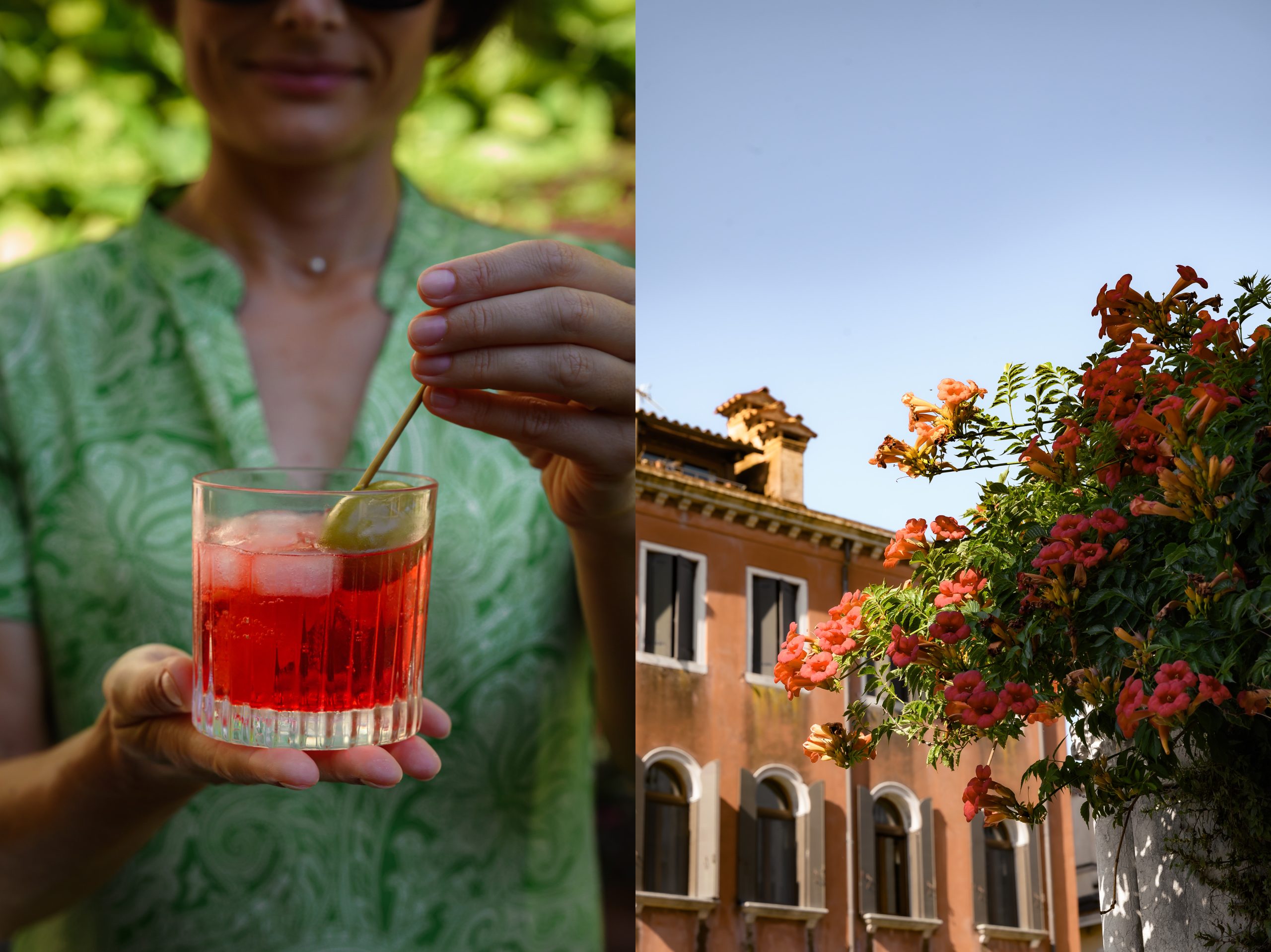
After we left Venice I didn’t have any spritz. In London I’d have a small glass of Campari on ice. Now, I don’t find Aperol interesting at all, it’s way too sweet for me and is lacking in complexity. But that’s me, and the truth is that palates change over time, and Aperol is still a pleasant introduction to the spritz drinking culture, gradually moving towards something more bitter.
The story of the spritz drink has it that it was first introduced by the Austrians during their occupation of the city in the nineteenth century. The soldiers being used to lesser strength alcoholic drinks than the local wines started diluting them. To the white wines from Veneto sparkling water was added, in order to make them lighter – less alcoholic. The practice of doing so took its name from the German verb: spritzen, which literally means spruzzare – to spray.
This initial innocent process of making the local wines more pleasing to the Austrians, over the years transformed itself into a real and proper social ritual: l’aperitivo veneziano.
The spritz that we know today is enriched by the introduction of a bitter, which elevates and balances out the flavours. A perfect harmony between the sweet, bitter and sparkling (wine and water). Venice gave an enormous hug to this drink making it her own.
There are only three ingredients involved: whine wine which is the base of the cocktail, in Venice however, we tend to reach for Prosecco, of which aromatic fresh aromas match other components of the drink so well. Needless to add that the wine or Prosecco should be well chilled and of a good quality, which doesn’t necessarily mean very expensive. Next we have sparkling water, preferably soda water, and the bitter. When we talk about the Venetian Spritz, we add Select – a Venetian bitter born in 1920, representing the soul of the lagoon. Its intense ruby red colour and distinctive flavour are the result of a recipe based on a good thirty botanical ingredients.
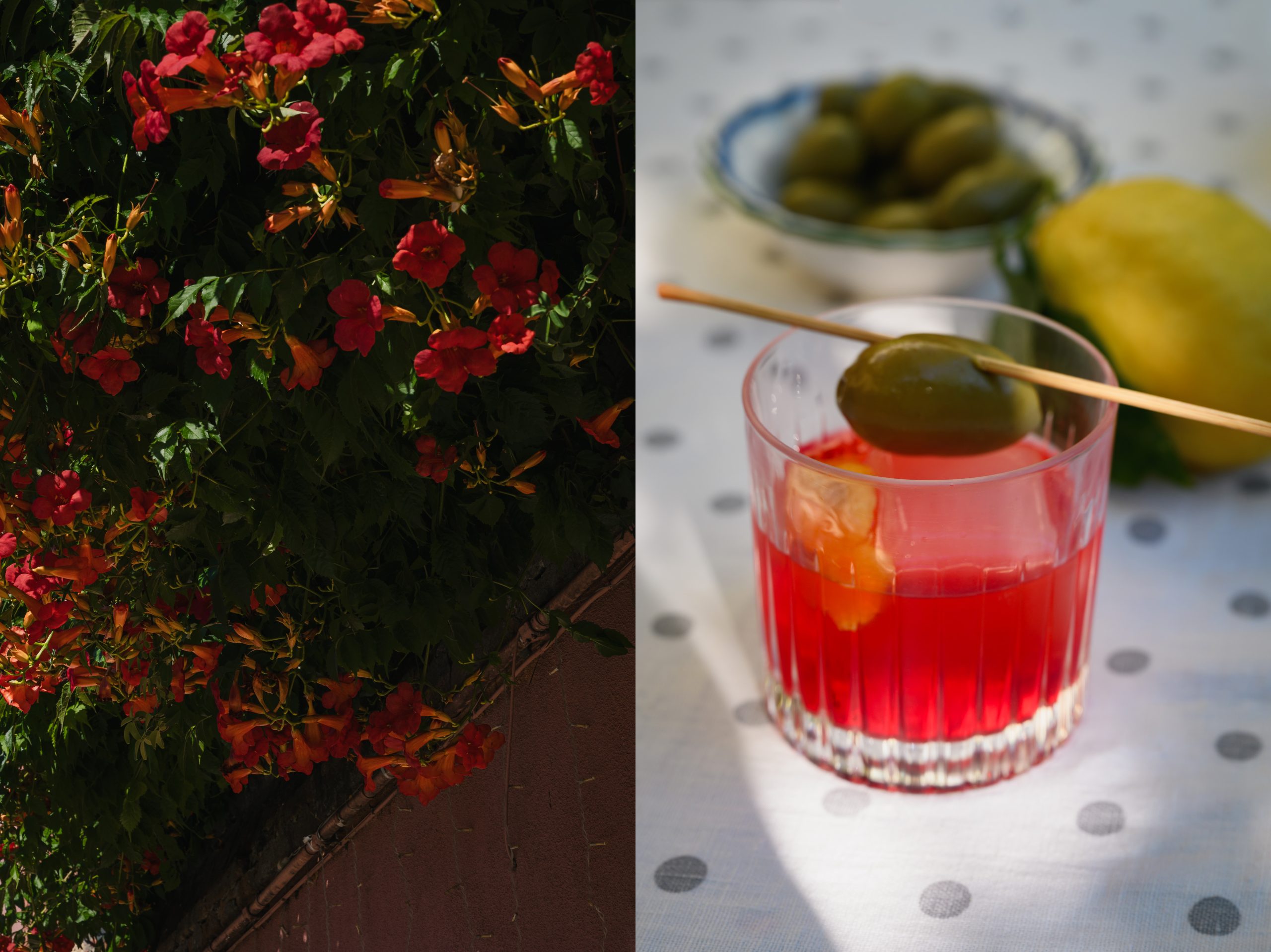
To turn this Venetian cocktail into a very good cocktail prepared at home make sure that the Prosecco is very cold, have lots of ice to hand, a few good olives (in brine) and a slice of citrus.
Find a good bottle of Prosecco that you really enjoy. There is nothing worse than a poor quality sparkling wine. In Venice I tend to pick up a bottle of Col Credas, Valdobbiadone DOCG from my local enoteca – Cantine del Vino già Schiavi (Dorsoduro), and that particular choice of spumante was a recommendation by one of the owners.
Oh, did I mention the glass? Traditionally it was the old fashioned glass used, not a goblet as we see almost everywhere nowadays. I’ve always preferred old fashioned glass otherwise known as the rocks glass over a goblet.
Start with filling up your glass with ice cubes, until almost the very top.
The proportions:
Pour in: 3 parts of Prosecco, 2 parts of Select bitter, 1 part of soda water – a splash really.
Give it just one gentle stir, decorate with a slice of an orange or lemon (if oranges are not in season) and a very good large olive.
I’ve made one practical change however, I use one large ice cube or two if they fit the glass. The smaller ice cubes melt too fast in current temperatures, unpleasantly diluting the drink.
The olive, I like it, the Dégustateur less so, hence I decided to include a small bowl of olives to nibble on.
Soda water is not easily found in the supermarkets here, I’ve tried and tested some highly sparkling waters available but since in Venice we add bubbly Prosecco, I don’t feel the need for any extra splash of water. I only have the spritz in the evenings, when I don’t mind a marginally higher content of %.
So we are all set for our Venetian aperitivo at home.
Salute !
P.S. Experiment with Aperol, Cynar and Campari bitters as well, but do try at least once the Venetian Select.
Since I like to keep it simple, classic and traditional I wouldn’t be able to comment on a fairly recent birth of the limoncello spritz. Never tried it and I may never will.